Your flight lands at Terminal 2 — the international one, the only one that takes the flights from the United States and Canada. Immigration takes its time. The bags come out. You push the trolley through customs, press the button, get the green light, and walk out expecting to find your driver.
Instead you find a hall full of desks.
Behind them are people in polo shirts with lanyards and clipboards, and they are looking directly at you. One asks where you are headed. Another asks who is taking you. A third is already walking at your pace, and is very good company.
This happens to every single person who arrives in Los Cabos, and almost nothing written for visitors describes it. It is worth understanding before you are standing in it, because the difference between knowing and not knowing is about an hour of your first day.
Who those people are
They are not airport staff, they are not from your hotel, and they are not the company you booked your transfer with.
Most work for timeshare and vacation-club developers. In the trade they are OPCs — operadores de promoción y contacto — and their job is not to sell you anything in the terminal. It is to get you to agree to a presentation: a resort tour, ninety minutes on paper and longer in practice, ending with somebody asking you to buy. They are paid for the bookings they produce, which explains the whole texture of the encounter: the warmth, the patience, the way a polite answer is treated as an opening rather than an answer.
Their desks are commercial concessions inside the terminal. That is precisely why they work. A desk inside an airport looks like infrastructure, and infrastructure is not usually trying to sell you anything.
How the approach actually goes
The most detailed first-hand account we could stand behind is a traveller’s own write-up on the Cabo San Lucas forum: a man with an employee badge and a clipboard asked where they were headed and who was taking them. Told they had a package from a wholesaler, he pointed them to a counter. The man at the counter recognised the wholesaler’s name, picked up a phone, called the driver, and said the bus would be there in fifteen minutes. Then came a stream of genuinely useful advice — swim at this beach, not at that one, here is a map — and a request for a fifty-dollar deposit, refundable tomorrow. He could not come to the hotel himself, he explained. Whatever happens, do not lose the piece of paper with his name on it.
The real shuttle coordinator, outside, told them what had just happened. The paper committed them to a presentation.
That account is several years old now, and the honest thing to say is that we could not verify a recent, specific transcript of what is being said this season. What is consistent across a decade — from travellers, and from the forum’s own regular contributors as recently as last year — is the shape: an official-looking person, a question about your hotel or your ride, a redirection to a counter, a transaction begun inside the building.
Which gives you the only rule you need. Do not arrange anything, pay anything or agree to anything while you are still inside the terminal.
The one thing that sounds official and is not
Baja California Sur charges visitors a fee. It is real, it is called Embrace It, and in 2026 it is 488 pesos per person per visit — for international visitors aged twelve and over staying more than twenty-four hours. You pay it online, it generates a certificate with a QR code, and that code may be checked at random.
Here is the part worth carrying off the plane: the fee can only be paid online. It is not collected at the airport. There is no government tourist-tax desk in the arrivals hall. Anyone inside that building offering to take care of it for you — or to validate it, or to check it — does not work for the state of Baja California Sur.
If you have not paid it, do it from your phone at the hotel. Nothing in that hall is the official channel.
What nothing being free means
The offers are real. People walk out of presentations with cash, resort credit, a day on a boat, a week of transport. The offer is not a lie — it is a price. Someone has calculated what ninety minutes of your attention is worth, and it is worth more to them than what they are handing you.
If you are the kind of traveller who enjoys that trade and can sit through a hard close without flinching, it is a perfectly legitimate way to get something. Regular visitors do it on purpose and treat it as sport. A warning for anyone tempted: the dollar figures you will find quoted online trace back to forum posts that are now about a decade old. Do not arrive expecting a specific number.
What makes it expensive is agreeing to it at the end of a travel day, after a flight, with children melting down beside you, because walking away felt rude. Nothing good is decided in that state. If the offer is genuinely interesting, it will still exist in two days, by phone, after you have slept.
Where your ride actually is
Outside. Across the road.
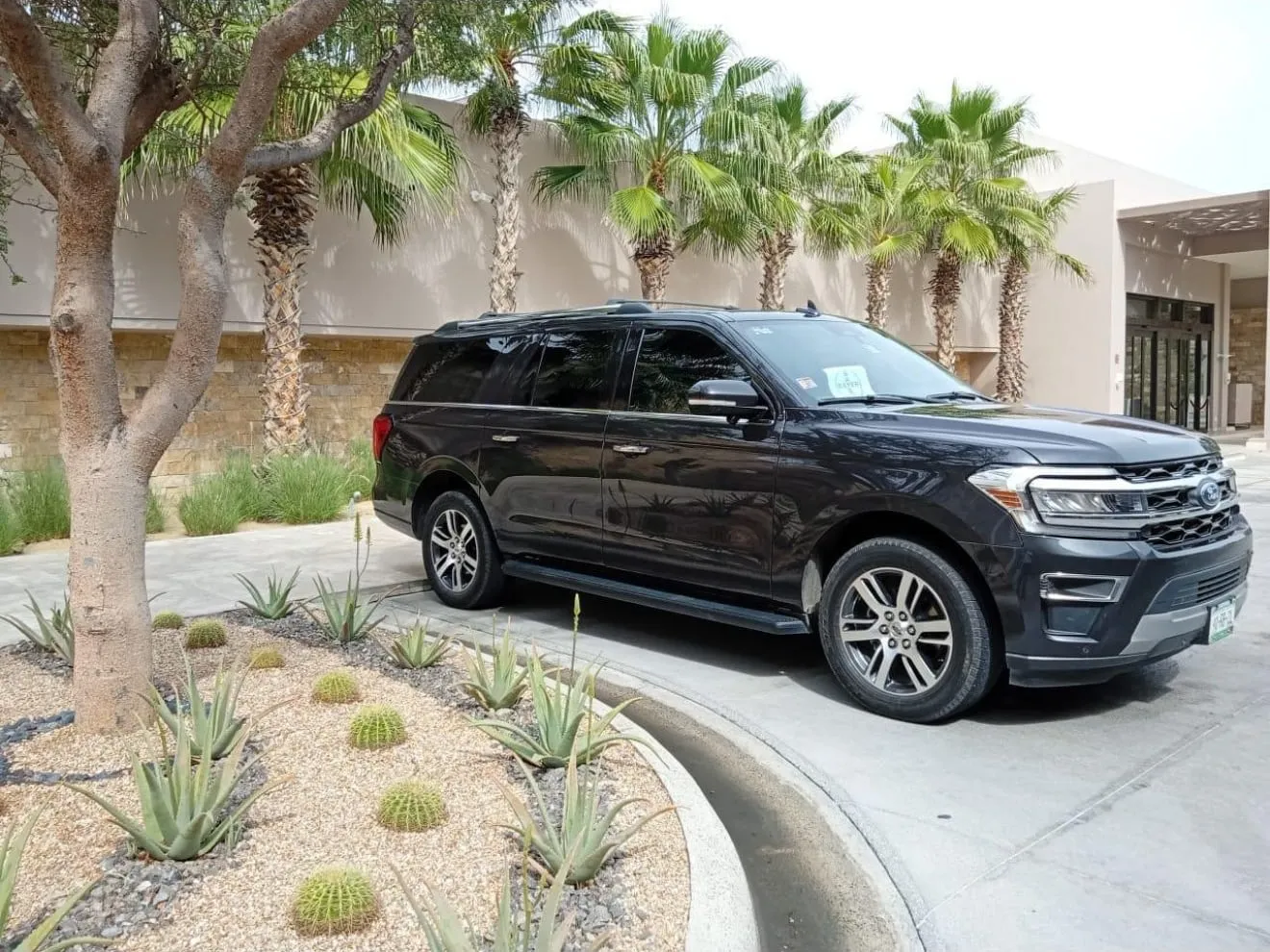
Come out of the terminal, cross to the far side, and you will find a row of numbered awnings. That is where the transport companies’ representatives stand with their signs, and where a pre-booked shuttle or private transfer meets you. If you are taking an authorised taxi instead, you buy a chit at the taxi booth at a fixed price for your zone before you get in — the fare is set by zone, not by meter.
Rental cars are not at the kerb. The agencies sit off the airport grounds and run their own free shuttles from the terminal.
And the question everyone asks: Uber. It works in Los Cabos and it does not solve your arrival. Mexico’s Supreme Court barred ride-hailing from operating inside airports in late 2025; a court order in March 2026 then stopped federal authorities from detaining Uber drivers on airport grounds; and the agreement signed weeks later between Uber and the taxi unions did not give Uber a concession at SJD. The practical result is that drop-offs for departures are uncontested — Uber’s own page for this airport talks only about drop-off — while arrival pickups remain obstructed, with passengers walking out of the restricted zone to meet a car. We went through the whole fight and what actually works in is there Uber in Cabo?.
On price, the one independent figure we trust is from Mexico News Daily in 2024: an airport taxi to the hotel zones ran US$80–100, against roughly US$50 by app. There is a quirk every resident knows — the same trip to the airport usually costs about half what it costs from it, which is the concession system showing its shape. For what a week here costs once you add all of this up, see is Los Cabos expensive?
Before you book the flight
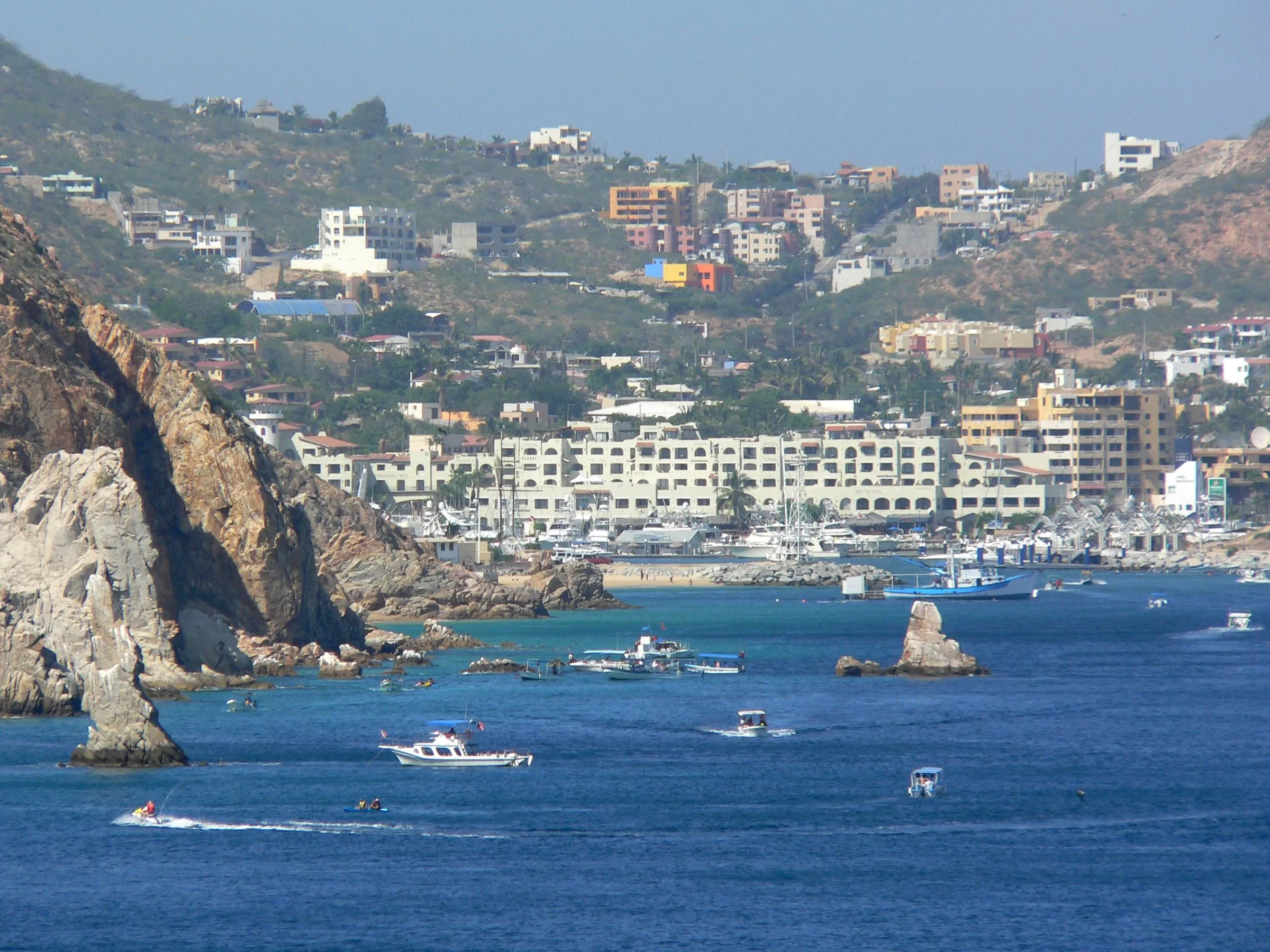
The single decision that changes this whole experience is where you are staying. San José del Cabo is about thirty minutes from the terminal and Cabo San Lucas about forty-five, with a highway corridor between them. The thirty surprises people, because the airport is in San José: the extra minutes are the turn off the highway and into a town of one-way streets, not the distance. A resort further down the corridor, reached without leaving the road, can be a shorter drive than the centre of the town the airport sits in. That distance is also your taxi fare, twice a day, for the length of your holiday — our guide to the five areas walks through what each one costs you in driving.
One more thing to expect: the airport is being rebuilt. The operator began merging the two terminals into a single expanded Terminal 2 in 2026, with the work due to finish at the end of 2027. Signage, kerbside arrangements and walking routes will move during that period. The awnings across the road have outlasted several such projects, but check your transfer company’s instructions rather than ours if something looks different.
The short version
The hall is not dangerous and nobody is going to rob you. It is a sales floor, placed at the exact moment in your trip when you are least equipped to say no, and it works often enough to be worth the rent on those desks.
Keep walking. Say no, gracias, once, without stopping. Do not hand anyone your passport, your reservation or your phone. Cross the road, find your awning, and start your holiday.
If something does go wrong with a service you paid for, the state’s tourist assistance line is +52 624 105 0551. Consumer protection keeps a desk at this airport only seasonally, in the high summer weeks, so do not count on finding one.