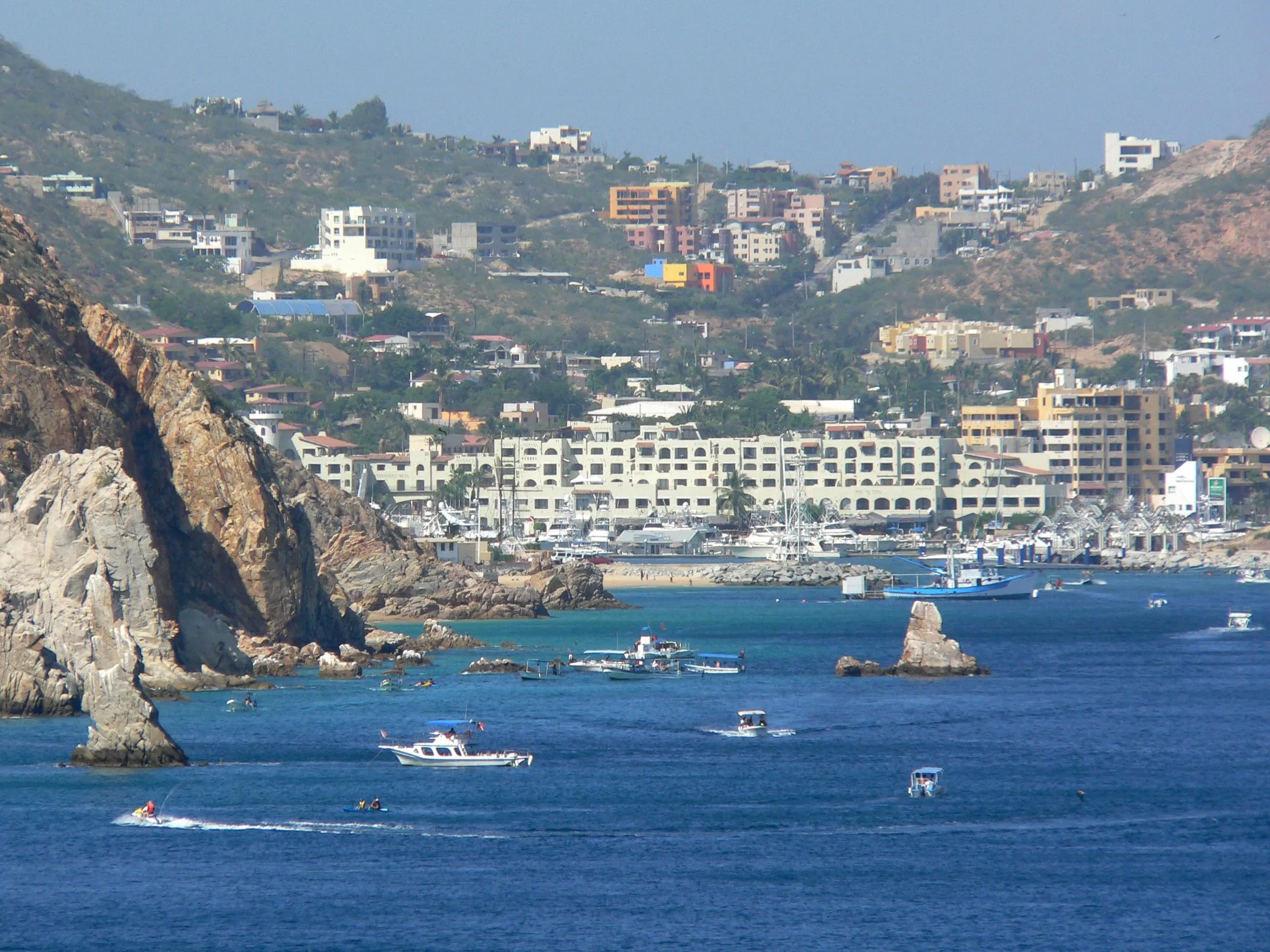
Yes. By Mexican standards, emphatically.
But “expensive” is not a property of the destination, and the advice that follows the question is almost always aimed at the wrong line. Eating at the taquería instead of the hotel restaurant saves you perhaps forty dollars a day. Three other decisions, made before you land, move the same week by thousands.
Here is what the published numbers actually say.
The number the industry reports on itself
The Asociación de Hoteles de Los Cabos collects occupancy and rate from its members every month, and the destination’s tourism trust publishes it. For January to July 2026 the average daily rate across Los Cabos was $455 a night, with occupancy at 71.7 per cent.
Seven nights at that average is $3,185, before tax and before anyone eats anything.
Two honest caveats, because this is the number everyone quotes and almost nobody qualifies. It covers the hotels in the association — around 77 per cent of the destination’s rooms, weighted towards the branded resorts — and it is an average of what was sold, not what is available. Most villas and most of the rental platforms sit outside it entirely.
It is still the right place to start, for one reason: it is the only rate in Los Cabos that is counted the same way every month.
Decision one: which Los Cabos
The same source splits the destination in three. For January to July 2026:
| Where | Average night |
|---|---|
| Cabo San Lucas | $311 |
| San José del Cabo | $326 |
| The Corridor (Ruta Escénica) | $646 |
Read that twice. The Corridor costs roughly double either town. It is where the resorts with the photograph live, and it prices accordingly.
Seven nights on the Corridor at its average is $4,522. Seven in San José is $2,282. That is a $2,240 gap inside one municipality, in the same week, and for most families it is larger than the flights.
Which is right depends on the week you want, not on the money — a Corridor villa with a cook in it is a different holiday from a town with a plaza, and we have argued elsewhere that the honest way to choose is to pick where you want dinner. Just know what the choice costs before you make it.
Decision two: the month
The same report, the same hotels, 2026 month by month:
| Month | Average night |
|---|---|
| January | $499 |
| February | $512 |
| March | $523 |
| April | $470 |
| May | $414 |
| June | $393 |
| July | $376 |
March to July is a $147 a night swing — over a thousand dollars on a week, from nothing but the dates. The low months are low for reasons that are not secret, and we have set out what each one is actually like, sea temperature and rain days included, in when to come to Los Cabos. September is hotter, wetter and emptier than March, and considerably cheaper. Whether that is a bargain or a mistake is a question about you.
Decision three: what the bill adds after the rate
Three separate things land on a Los Cabos hotel bill, and only the first is the one people expect.
- IVA, 16 per cent. Mexico’s value-added tax.
- Lodging tax, 4 per cent. Baja California Sur’s impuesto sobre hospedaje, set in article 16 of the state’s Ley de Hacienda and raised from 3 to 4 per cent with effect from 1 January 2023.
- The environmental sanitation charge, which is municipal and is charged per night, not as a percentage.
That third one is worth the paragraph. Los Cabos sets it in UMA, the inflation-linked unit Mexican law uses instead of pesos, and the 2026 UMA is 117.31 pesos a day. So, this year:
| Charged on | Rate | Roughly |
|---|---|---|
| A hotel room, per night | 70% UMA | 82 pesos |
| A room booked through a digital platform, per night | 200% UMA | 235 pesos |
| A restaurant or bar bill, per diner | 10% UMA | 12 pesos |
| A car or boat rental | 50% UMA | 59 pesos |
A villa booked through a platform carries almost three times the nightly environmental charge of a hotel room. It is a small number per night and a visible one across a week with several bedrooms, and it is the single most common surprise on a final invoice here.
Add it up: roughly a fifth on top of the room rate in tax, plus a fixed nightly charge. A $455 average night is really about $550.
Getting around, which costs less than people fear
The airport run is the first real purchase of the trip and the one people most often get wrong in both directions.
- The public bus. Ruta del Desierto serves the airport and both towns. Fares set in December 2024 by the operator: 100 pesos to or from the airport, 45 pesos between Cabo San Lucas and San José, 16 pesos on local runs. If you travel light, this is the whole answer.
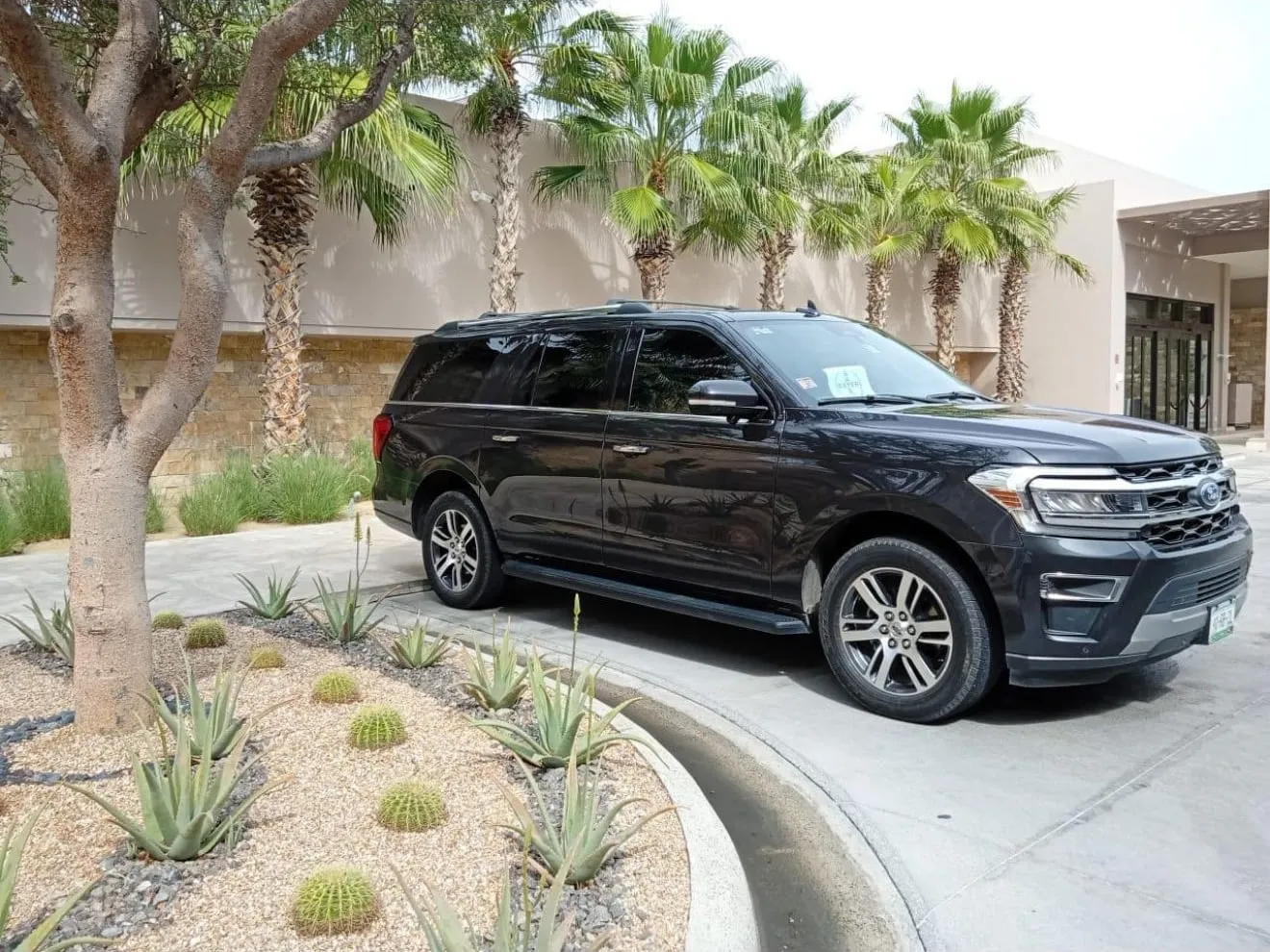
- A private transfer. Fixed, per vehicle, agreed before you land. The one price we can quote because it is published rather than negotiated at the kerb: $120 per vehicle to San José, the Corridor or Cabo San Lucas, up to eleven people with luggage, and $115 to Pedregal, from Cabo Travel Boutique, which is listed in this directory. For four people that is $30 a head. Ask whoever you use for the same thing in writing: a flat price per vehicle, before you fly.
- A rental car. The daily rate in the search engine is not the price. Third-party liability cover is mandatory to drive Mexico’s federal roads and most foreign credit-card cover does not replace it, so it is added at the counter. Budget for it or be ambushed by it.
And no, you cannot plan the arrival around the app — that is a longer story, and the short version is that it will not be waiting for you.
What costs nothing
Mexican beaches are federal property and access to them is free by law, under the Ley General de Bienes Nacionales — a point the 2021 reform put beyond argument. No hotel owns the sand in front of it. If a property implies otherwise, it is describing its own driveway, not the beach.
The estuary at first light in San José, the plaza, the market, the walk through the Art District, the swim before the wind comes up: all free, and between June and October the shade and the water are most of what the day is for anyway.
So, is it expensive?
A week on the Corridor in March, with the car, the transfers and the resort restaurants, is a genuinely expensive holiday by any measure.
A week in San José in September, in a town hotel, eating where people who live here eat and taking the bus once, is not. It is a different holiday — hotter, wetter, quieter — and it happens in the same municipality, under the same sun, on the same beaches.
Both of them are Los Cabos. The destination is not what sets the price. You are.
Where these numbers come from. Hotel rate and occupancy: Observatorio Turístico de Los Cabos, August 2026 edition, from Asociación de Hoteles de Los Cabos data (FITURCA). Lodging tax: Ley de Hacienda del Estado de Baja California Sur, article 16, and the state’s own procedure sheet. Environmental charge: the Tesorería Municipal de Los Cabos, under Decreto Legislativo 3134, converted at the 2026 UMA published by INEGI. Bus fares: announced by Ruta del Desierto in December 2024. Transfer prices: published by the operator. Prices move; the sources are all public, and we would rather you checked them than took our word.